

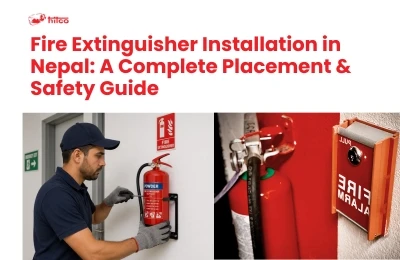
Fire extinguisher installation in Nepal is something most homes and buildings treat as a one-time task: buy the unit, hang it on the wall, and move on. But having a fire extinguisher and having it correctly placed, mounted, and maintained are two very different things. That gap is where most fire safety plans fail.
In Nepal, dense housing, older electrical systems, and cooking-related fire risks make proper installation more important than most people realize. A unit mounted too high, blocked by furniture, or placed in the wrong room offers no real protection when seconds matter.
This guide covers fire extinguisher installation guide with everything from placement rules and mounting height to type selection and basic maintenance written for real homes, apartments, and commercial buildings in Nepal.
Why Proper Installation of Fire Extinguisher Matters in Homes & Offices?
Having a fire extinguisher is not enough; correct installation is what makes it actually work when you need it. Here is what happens when installation is done wrong:
- Mounted too high: most people cannot reach or operate it quickly under stress
- Blocked by furniture or equipment: a fire extinguisher you cannot get to in 3 seconds is useless
- Placed in the wrong room: a kitchen fire extinguisher stored in a bedroom helps no one
- Left unmaintained: an expired or uncharged unit will fail exactly when you need it most
- No signage: in an unfamiliar building, people waste critical seconds just finding it
In Nepal, narrow stairwells, compact kitchens, older wiring, and high-density housing make this even more critical. Your extinguisher needs to be reachable within seconds, not something you search for while a fire spreads.
Where to Install Fire Extinguishers in Homes and Buildings of Nepal?
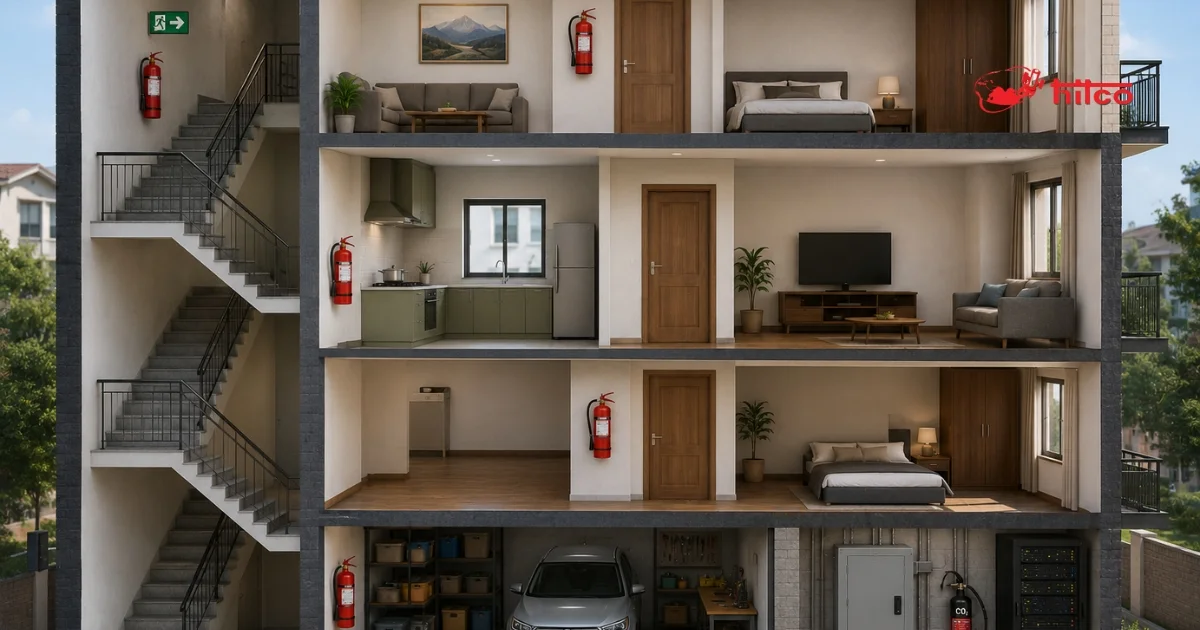
The fire extinguisher placement guide in Nepal safety professionals follow are based on a few core principles: visibility, accessibility, proximity to risk, and travel distance. Here is what those mean in practice.
1. Near Exit Routes
Fire extinguishers should always be placed near exit paths, not deep inside rooms where you would need to move toward the fire to reach them. This way you can use the extinguisher while keeping your escape route clear behind you.
2. Kitchens and Cooking Areas
Kitchens are the highest fire risk area in most Nepali homes. Mounting an ABC fire extinguisher near (but not directly above) or beside the stove. Close enough to grab quickly, far enough that a stove fire does not block your access to it.
3. Each Floor of Multi-Story Buildings
For apartments and multi-story homes, every floor needs at least one extinguisher. Relying on a single unit for two or three floors is one of the most common mistakes in Nepali residential buildings and one of the most dangerous.
4. Garages and Storage Areas
Garages, workshops, and storage rooms holding flammable materials, fuel, paint, and cleaning chemicals need their own dedicated unit. These spaces are consistently overlooked in residential fire planning.
5. Server Rooms and Electrical Panels
Server rooms and electrical panels require CO₂ extinguishers, specifically not dry powder units. Using the wrong type on an electrical fire can destroy equipment and fail to control the fire.
Fire Extinguisher Placement Rules in Nepal: Travel Distance & Coverage
One of the most important and most ignored placement rules is travel distance. This refers to how far any person in a building should ever need to walk to reach a fire extinguisher.
Occupancy Type | Maximum Travel Distance |
Residential / Light Hazard | 23 meters (75 feet) |
Commercial / Ordinary Hazard | 15 meters (50 feet) |
Industrial / High Hazard | 9 meters (30 feet) |
In a typical Nepali home or apartment, no room should be more than 23 meters from an extinguisher, which in practice means at least one unit per floor. In a medium-sized office or retail space, that distance drops to 15 meters, meaning longer corridors and open floors need multiple units. For factories or warehouses with higher fire loads, coverage must be even tighter at 9 meters. If you are fitting out a workplace, review the specific fire extinguisher rules for offices in Nepal to stay compliant.
Fire Extinguisher Mounting Height: Getting It Right
Mounting height is one of the most specific and most ignored parts of fire extinguisher installation. Too high and it becomes unreachable under stress. Too low and it risks moisture damage and reduced visibility.
Here are the standard mounting height guidelines to follow:
- Units weighing up to 18 kg: the top of the extinguisher should be no more than 1.5 meters (5 feet) from the floor
- Units weighing over 18 kg: the top should be no higher than 1 meter (3.5 feet) from the floor
- All units: the bottom of the extinguisher should sit at least 10 cm (4 inches) above the floor to prevent moisture damage
The reason heavier units are mounted lower is straightforward: in a real emergency, people crouch, panic, and lose fine motor control. A heavy extinguisher at eye level cannot be safely lifted and operated by most people under stress.
For apartments and multi-story buildings in Nepal, apply the same height rules on every single floor. When any resident, not just the one who installed it, may need to use it, consistency is not optional.
How to Install a Fire Extinguisher in a House: Step by Step
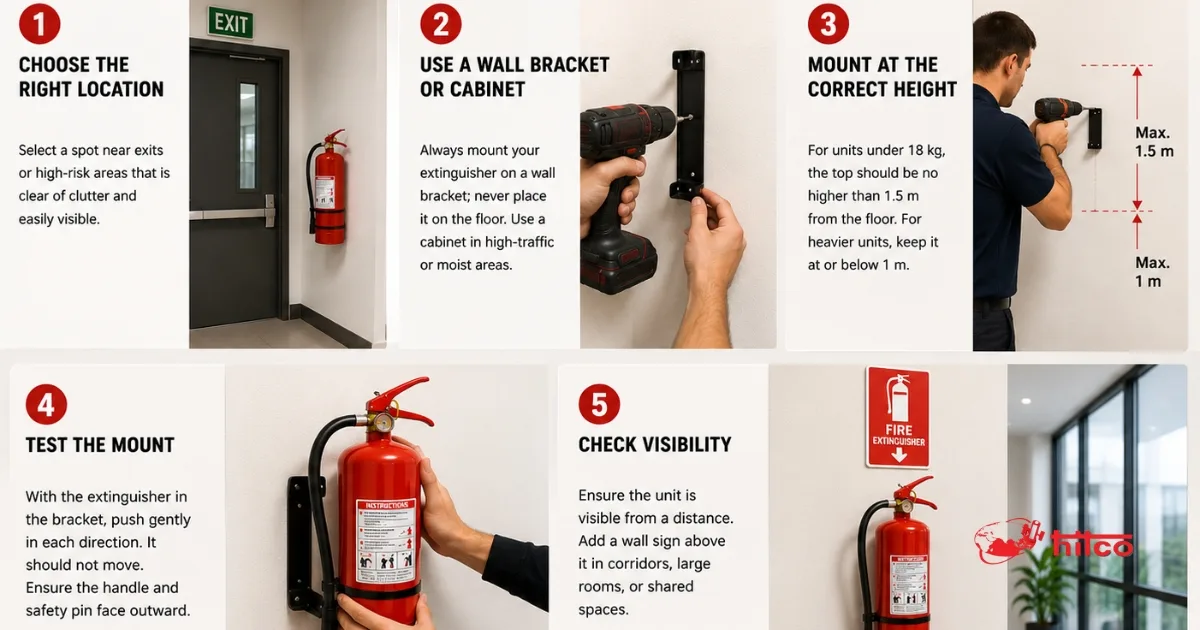
Here is how to install a fire extinguisher correctly, from choosing the right spot to making sure it is ready to use.
Step 1: Choose the Right Location
Select a spot near exits or high-risk areas that is clear of clutter and visible without searching. Avoid placing it behind doors, inside cabinets, or in corners where it would not be immediately obvious in an emergency.
Step 2: Use a Wall Bracket or Cabinet
Always mount your extinguisher on a wall bracket; never place it on the floor or lean it against a wall. Most units come with a bracket included. For high-traffic areas or spaces with moisture risk, a wall-mounted cabinet offers additional protection.
Step 3: Mount at the Correct Height.
Mark your wall position based on the weight of your unit. For extinguishers under 18 kg, the top should sit no higher than 1.5 meters from the floor. For heavier units, keep it at or below 1 meter. Drill your anchor points, secure the bracket firmly, and confirm the unit does not shift or tilt once in place.
Step 4: Test the Mount
With the extinguisher in the bracket, give it a firm but gentle push in each direction. It should not move. Check that the handle and safety pin are facing outward and can be gripped easily without adjusting your hand position.
Step 5: Check Visibility
Step back and confirm the unit is visible from a reasonable distance. If it is in a corridor, large room, or shared space, add a wall sign directly above it. In apartment buildings where visitors or new residents may not know the layout, signage is not optional; it is part of the installation.
Recommended Read: How to choose a fire extinguisher for home in Nepal
Common Fire Extinguisher Placement Mistakes to Avoid
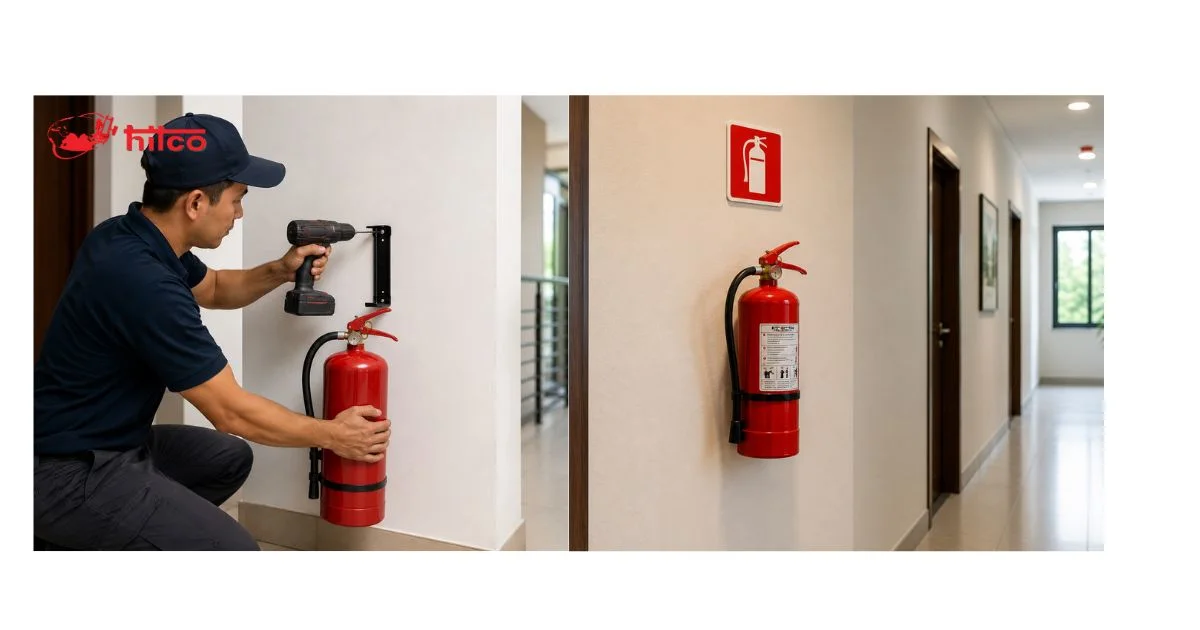
Even well-intentioned installations go wrong in predictable ways. Here are the fire extinguisher mistakes to avoid that turn a fire extinguisher from real protection into wall decoration.
- Mounting too high: if an average adult cannot grab and operate it under stress, it is too high. Follow the mounting height rules, not personal judgment
- Wrong location: always position it near the exit, not deep inside a room. Moving toward a fire to grab an extinguisher is the wrong direction
- Blocked access: furniture, boxes, or equipment placed in front of the unit defeats the entire purpose. The path to your extinguisher should always be clear
- Wrong type: a CO₂ extinguisher will not work on a cooking oil fire, and a dry powder unit can destroy electrical equipment. Match the type to the risk in each area
- Skipping maintenance: an expired pressure gauge, missing pin, or uncharged unit will fail at the exact moment you need it most. Follow a proper fire extinguisher refilling and maintenance in Nepal schedule to stay protected year-round
- No signage: in a large or unfamiliar space, signs make the difference between finding an extinguisher in 5 seconds or 50
- Wrong size: a small unit in a large commercial kitchen or warehouse gives inadequate coverage for the fire risk in that space
Avoiding these mistakes costs nothing; fixing the consequences of them can cost everything.
Why Choose HITCO for Fire Extinguisher Installation in Nepal
When it comes to fire safety in Nepal, the fire extinguisher supplier you choose matters as much as the product itself. HITCO is one of Nepal’s trusted names for fire extinguishers, serving both residential and commercial clients across the country.
Here is why homeowners and businesses trust HITCO:
- Certified, genuine products that meet Nepal’s fire safety standards and quality benchmarks
- Full range of extinguisher types: ABC dry powder for homes, CO₂ for server rooms and electrical panels, and everything in between
- Expert guidance on placement to help you choose the right unit for your specific space and risk zone
- Maintenance and refilling services including inspections, pressure checks, and recharging to keep your units compliant year-round
- Local presence across Nepal for faster delivery, reliable support, and quick response when you need assistance
Whether you are setting up fire safety for your home, office, or commercial property, HITCO gives you the right products and the right support to do it properly.
Fire Extinguishers Available at Hitco
-
 Quick View
 -
 Quick View
 -
 Quick View
 -
 Quick View
 -
 Quick View
 -
 Quick View
 -
 Quick View
 -
 Quick View
Need Help Choosing the Right Fire Extinguisher for your home or business? Contact HITCO today for expert advice, professional installation, and reliable fire safety solutions across Nepal.
Final Thoughts
Correct fire extinguisher installation in Nepal comes down to four things: the right type, the right location, the right height, and regular maintenance. None of it is complicated, but all of it matters.
If you are unsure about what your home or building requires, speak with a certified fire safety professional before you install. Good advice at the start costs far less than discovering a problem during an emergency.
Check your units monthly, follow the guidelines in this article, and do not treat installation as a one-time task. A fire extinguisher that is properly placed and maintained is one of the most effective safety investments you can make.
Is Your Fire Extinguisher Installed in the Right Place? Get expert advice from HITCO to ensure your home or building is protected when every second counts.
FAQ's on Fire Extinguisher Installation in Nepal
Where should fire extinguishers be placed in a building?
Near exits, stairwells, kitchens, and electrical panels at every floor level. No one should need to travel more than 15-23 meters to reach one.
What is the correct fire extinguisher mounting height?
Units under 18 kg should be no higher than 1.5 meters from the floor. Heavier units no higher than 1 meter, with the bottom at least 10 cm above the floor.
How many fire extinguishers are needed in a building in Nepal?
At minimum one per floor, one per 200-300 sqm for light-hazard buildings, and one per 100-150 sqm for commercial spaces.
Which type of fire extinguisher is best for home use in Nepal?
An ABC dry powder extinguisher is the most practical choice. It covers ordinary combustibles, flammable liquids, and electrical fires, the three most common risks in Nepali homes. To understand how it differs from other classes, check out our comparison on ABC vs CO2 fire extinguishers.
How often should fire extinguishers be inspected in Nepal?
A visual check monthly and a professional inspection annually. Any unit that has been used even partially should be recharged or replaced immediately.
Are there specific fire safety regulations in Nepal for commercial buildings?
Yes, Nepal’s National Building Code and the Department of Fire Brigade set requirements covering placement standards, minimum coverage, signage, and suppression systems for larger buildings.

