

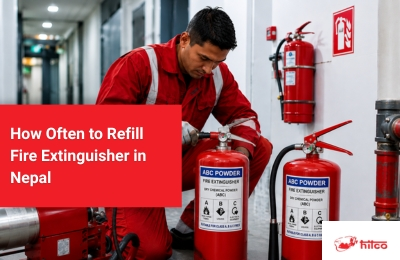
Most fire extinguishers need refilling every 1–2 years for dry powder (ABC) types and every 3–5 years for CO₂ types or immediately after any use, even a short burst. But the real risk isn’t forgetting the number; it’s assuming your extinguisher is “probably fine” because it’s never been used.
In Nepal, where dense buildings, old wiring, and festival-season fire hazards are common, an unrefilled extinguisher isn’t a backup plan it’s a false sense of security. This guide breaks down exactly how often to refill fire extinguisher, the warning signs that mean it’s overdue, and where to get it done in Nepal.
Quick Overview
- Fire Extinguisher Refill Frequency:
Dry Powder (ABC) & Foam: Refill every 1–2 years (powder clumps and pressure drops over time).
CO₂ Types: Refill every 3–5 years.
After Any Discharge: Refill immediately, even after a 2-second burst.
Monthly Check Signals: Get immediate servicing if the gauge needle is outside the green zone, the safety seal is broken, powder is leaking, or physical rust/dents appear.
Stay prepared before it’s too late. Check or refill your fire extinguisher today with HITCO Nepal.
What Is Fire Extinguisher Refill and Why Is It Important?
Fire extinguisher refilling basically means restoring the extinguisher back to full working condition by replacing the extinguishing agent, recharging the pressure, and checking all the internal parts.
Over time, even an unused fire extinguisher in Nepal loses pressure. The chemical inside can degrade. The seals get weak. So when a fire breaks out and you pull the pin, nothing comes out. That’s the worst-case scenario, and it happens more than people realize.
Why Regular Refilling Is Important
- Keeps the extinguisher fully charged and ready to use
- Ensures the chemical agent works properly during a fire
- Prevents unexpected failure in a real emergency
- Protects your home, office, and the people inside
- Saves you from bigger losses caused by an uncontrolled fire
Regular refilling isn’t just maintenance; it’s what keeps your extinguisher actually useful when it matters most.
Before refilling, it’s important to know the different options available. You can explore the types of fire extinguishers used in Nepal to better understand which one you have.
How Often to Refill Fire Extinguisher of Different Types in Nepal?
Most people don’t think about this until it’s too late. Fire extinguisher refill frequency depends on the type of extinguisher you have, so here’s a closer look at each one.
Extinguisher Type | Refill Frequency |
Dry Powder (ABC Type) | Every 1–2 years |
CO₂ Extinguisher | Every 3–5 years |
Foam Type | Every 1–2 years |
Dry Powder (ABC Type): Refill Every 1–2 Years
Dry powder extinguishers are the most common type used in homes, offices, and shops across Nepal. The powder inside can settle or clump over time, and the pressure gradually drops even if the unit is never touched. That’s why these need refilling every 1–2 years, regardless of whether they’ve been used.
CO₂ Extinguisher: Refill Every 3–5 Years
CO₂ extinguishers hold their charge longer than dry powder types, which is why they only need refilling every 3–5 years under normal conditions. They’re commonly used around electrical equipment and server rooms, where a clean, residue-free extinguishing agent matters. Even with the longer interval, the pressure should still be checked periodically.
Foam Type: Refill Every 1–2 Years
Foam extinguishers are typically used where flammable liquids are a risk, such as kitchens or workshops. Like dry powder types, the foam agent and pressure degrade over 1–2 years, so they follow the same shorter refill cycle.
But schedule aside, refill immediately after any use, even a 3-second discharge. It looks fine from the outside, but the pressure drops fast.
If you’re unsure which extinguisher you’re using, comparing ABC vs CO₂ fire extinguishers can help you decide. You can also check the practical use cases for ABC fire extinguishers in Nepal.
Not sure if your extinguisher is due for a refill? Get it checked and refilled by Hitco Nepal a quick service now is a lot easier than dealing with a fire extinguisher that fails when you actually need it.
How to Tell If Your Fire Extinguisher Needs a Refill Now
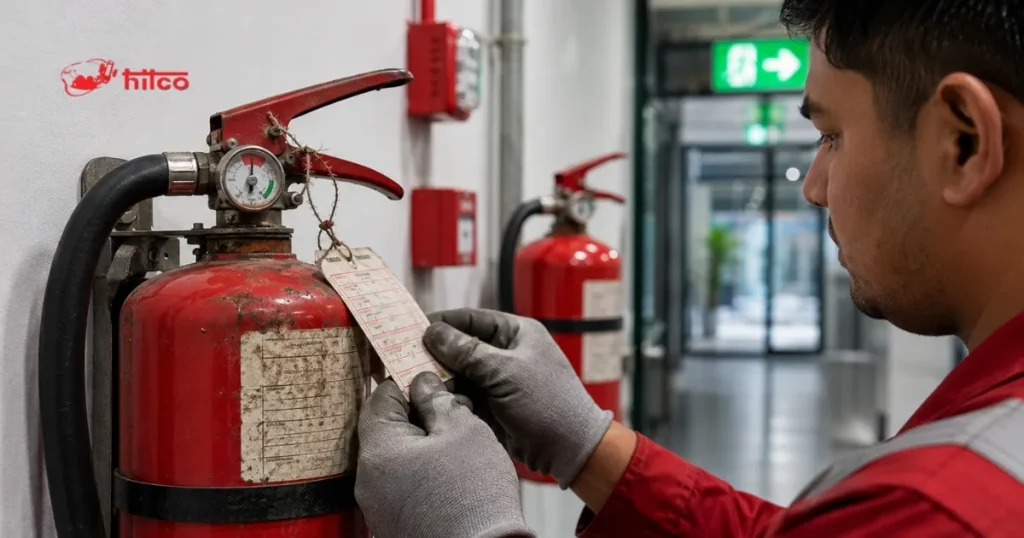
Refill frequency is a guideline, not a guarantee. An extinguisher can need refilling earlier than scheduled. A 2-minute monthly visual check catches this before it becomes a problem. Watch for common fire extinguisher mistakes that lead people to miss these signs.
- Pressure gauge in the red zone: the needle should sit in green. If it doesn’t, the extinguisher needs attention immediately.
- Broken or missing safety seal: a damaged or missing seal means it may have been triggered or tampered with, even if it looks full.
- Expired service date: check the tag. A passed date means it needs inspection regardless of appearance.
- Powder leakage or residue: visible powder near the nozzle or base signals an internal issue.
- Dents, rust, or corrosion: physical damage compromises internal pressure and structural safety.
- No label or inspection tag: if you can’t verify the last service date, get it checked. No tag means no proof it works.
Run through this list once a month. It takes two minutes and it’s the single easiest habit that determines whether your extinguisher works when you need it.
Where to Refill Fire Extinguisher in Nepal?
The easiest way to refill a fire extinguisher in Nepal is through Hitco Nepal, which offers certified refilling with pickup and delivery all across the country, not just in Kathmandu.
Hitco follows a certified fire safety service process for every refill, uses MAP 70% powder for dry powder extinguishers, and backs every refill with a 3-year warranty. Service is available in:
- Kathmandu, Lalitpur & Bhaktapur: Pickup & delivery, certified technicians
- Pokhara, Biratnagar, Butwal, and beyond: Nationwide delivery and servicing
If you’re not going with Hitco, make sure whichever provider you choose offers certified technicians, pressure-testing after every refill, a clear invoice, and a warranty, and avoid informal shops that refill manually without testing.
If you’re setting up safety for a business, it’s also worth knowing the top fire safety equipment every business must have. Hitco supplies and services all of it under one roof.
What to Look for Before Choosing a Fire Extinguisher Refilling Provider in Nepal?
The most important thing to check is whether the provider uses certified technicians and pressure-tests every refill that alone separates a real fire safety company from an informal shop with a refill kit.
Beyond that, make sure they also offer:
- Clear invoice and service record
- A warranty on the refill itself
- Proper equipment, not manual or makeshift refilling
Hitco Nepal ticks all of these: inspecting, refilling, testing, and certifying every extinguisher before it’s handed back.
Common Mistakes People Make While Refilling a Fire Extinguisher (Avoid This)
Most fire safety failures don’t happen because of a freak accident; they happen because of basic negligence that could’ve been avoided with a two-minute check. Here are the mistakes that come up again and again:
- Ignoring the expiry date: an expired extinguisher may not discharge properly or may not work at all when you need it most.
- Skipping annual servicing: internal parts degrade over time even if the extinguisher is never used, so “it’s never been touched” is not the same as “it’s ready to use.”
- Buying cheap, uncertified units: low-quality extinguishers often fail under pressure, which defeats the entire purpose of having one.
- DIY refilling: this is genuinely dangerous. Incorrect pressure can cause the cylinder to burst. Always leave refilling to a certified professional.
Most of these come down to one thing: treating a fire extinguisher as a one-time purchase instead of ongoing safety equipment.
Final Thoughts
Knowing how often to refill a fire extinguisher isn’t complicated 1–2 years for dry powder, 3–5 years for CO₂, and immediately after any use. What actually protects you isn’t the schedule itself; it’s sticking to it.
A fire extinguisher refill isn’t an expense. It’s basic maintenance like changing your vehicle’s oil; you don’t wait for it to fail before doing it.
A monthly gauge check, a professional service once a year, and a refill after any discharge is all it takes. Fire safety doesn’t need to be complicated. It just needs to be consistent.
Don’t wait for an emergency to find out your extinguisher wasn’t ready.
Stay prepared before it’s too late. Refill your fire extinguisher today with HITCO Nepal and keep your home or business protected. Book your service now.
FAQs
How often should a fire extinguisher be refilled?
Dry powder (ABC) extinguishers: every 1–2 years. CO₂ extinguishers: every 3–5 years. Refill immediately after any use, regardless of schedule.
Can a fire extinguisher be refilled after partial use?
Yes, and it should be. Even a few seconds of discharge drops pressure enough to make it unreliable.
How do I know if my fire extinguisher needs a refill?
Check the pressure gauge (should be in the green zone), inspect the safety seal, and check the service tag for an expired date. Do this monthly.
Is it safe to use an expired fire extinguisher?
Not reliably. It may discharge poorly or not at all. Get it serviced or replaced.
What happens if you don't refill a fire extinguisher on time?
It can fail completely during a fire low pressure, degraded chemical, or a blocked nozzle makes it useless exactly when it matters most.
How often should fire extinguishers be inspected in Nepal?
Monthly self-check at minimum, with annual professional servicing as the standard for homes and businesses.
Can I refill a fire extinguisher myself?
No. Refilling requires specialized equipment and pressure testing. DIY refilling is genuinely dangerous.
Is it cheaper to refill or replace a fire extinguisher?
Refilling is usually 30–60% cheaper than buying new. Unless the cylinder itself is damaged, always refill.

