

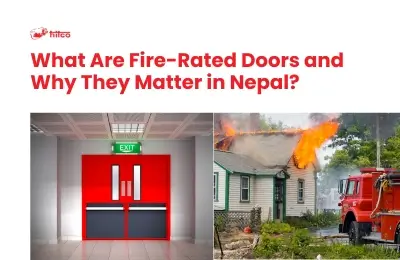
Fire-rated doors are specially built doors designed to resist fire and smoke for a defined period, typically 30 to 120 minutes, giving people time to evacuate and preventing fire from spreading through a building.
When a fire breaks out, the first few minutes are important. How far the fire spreads, how quickly smoke fills a corridor, and whether people can escape safely. All of this often comes down to the doors in between.
Fire-rated doors in Nepal are becoming more common in commercial buildings, hotels, hospitals, and modern residential complexes. But many building owners and contractors still don’t fully understand what these doors are, how they work, or why they are required.
This guide covers everything you need to know clearly and practically.
Need certified fire-rated doors for your building in Nepal? Hitco supplies and installs fire-rated doors from product selection to final installation.
What Are Fire-Rated Doors and How Do They Work?
Fire-rated doors are specially engineered doors built to resist the spread of fire and smoke for a defined period of time. Unlike standard doors, which can warp, crack, or collapse within minutes of fire exposure, fire resistant doors Nepal are designed to remain intact and functional during a fire emergency.
The core purpose is containment, keeping fire confined to one area long enough for people to evacuate and for firefighters to respond.
In practical terms, a fire-rated door does three things:
- Blocks flames from passing from one room or zone to another
- Resists heat transfer, reducing the temperature on the non-fire side
- Prevents smoke and toxic gases from spreading through gaps and crevices
These doors are not just heavy-duty doors with an extra coat of paint. They are purpose-built assemblies tested under controlled fire conditions.
What Are They Made Of?
Most fire-rated steel doors Nepal is made from galvanized steel with a core filled with mineral wool, ceramic fiber, or a honeycomb structure. These materials retain structural integrity under extreme heat without melting or burning through.
Fire-rated wooden doors Nepal also exist, though the construction is more complex. They use specially treated timber combined with fire-resistant board layers. For areas where aesthetics matter, like hotel lobbies or corporate offices, wooden fire doors provide a more refined appearance while still meeting safety requirements.
Why Is the Full Door Assembly Important?
A fire door is never just the door leaf. A complete fire door assembly includes the following:
- Door leaf: the main panel that blocks fire and smoke
- Door frame: must be fire-rated to match the door
- Fire-rated hinges: Standard hinges will fail under heat
- Intumescent seals: expand when heated to close the gap between door and frame
- Door closer: ensures the door returns to a fully closed position after each use
All five components must be tested and certified together as one unit. Replacing even one part with an uncertified version, say, a standard hinge, can compromise the entire door’s fire rating.
What Do Intumescent Seals Do?
Intumescent seals are strips installed around the door edges. Under normal conditions, they sit flat. When exposed to heat, they rapidly expand, sometimes up to ten times their original size, sealing the gap between the door and frame.
This blocks smoke and toxic gases from passing through. In a real fire, smoke inhalation is often more dangerous than the flames themselves. A properly sealed fire door significantly reduces that risk.
How Are Fire Doors Rated and Which One Do You Need?
Fire doors are classified by how long they can resist fire under test conditions. The most common ratings are:
Rating | Resistance Duration |
FD30 | 30 minutes |
FD60 | 60 minutes |
FD90 | 90 minutes |
FD120 | 120 minutes |
In most cases:
- FD30: suitable for doors between rooms within the same floor in low-risk residential buildings
- FD60: recommended for stairwells, corridors, and escape routes in commercial buildings
- FD90 and FD120: required for high-risk areas such as electrical rooms, generator rooms, and high-rise stairwells
The right rating also depends on where the door is installed. For a full breakdown, see Where to Install Fire-Rated Doors in Buildings.
Higher ratings don’t always mean better for every situation. They also mean heavier doors, more robust hardware, and higher costs. Matching the right rating to the right location is what makes a fire door genuinely effective not just compliant.
Why Fire-Rated Doors Matter in Nepal?
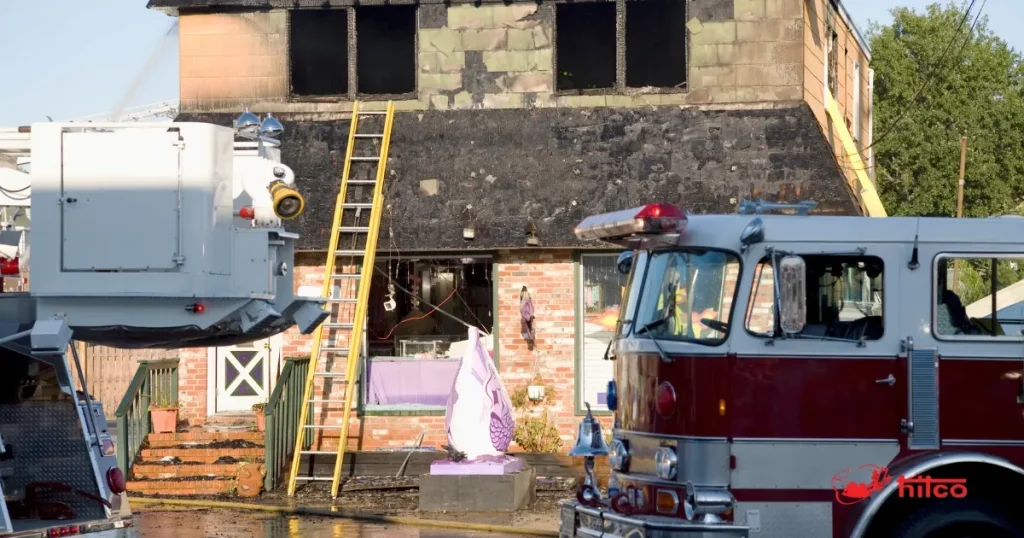
Nepal’s urbanization has accelerated significantly over the past decade. Kathmandu, Pokhara, Bharatpur, and other cities are seeing rapid construction of high-rise apartments, commercial towers, hotels, hospitals, and industrial facilities.
With that growth comes a real and growing risk of fire incidents, especially in densely built urban areas where fire can spread quickly between structures.
Here is why fire-rated doors in Nepal are essential for every building:
Safe Evacuation During Emergencies
The most immediate reason fire safety doors Nepal are required is to give people time to escape. When a fire door holds for 60 or 90 minutes, it gives occupants enough time to reach safety and firefighters enough time to respond. Stairwells stay usable. Corridors remain passable. People have a realistic chance to reach safety before conditions become life-threatening.
In a building without proper fire doors, smoke can fill an entire floor within minutes. Escape routes become unusable fast.
Compartmentalization of Fire
Fire protection doors Nepal work by dividing a building into fire-resistant zones or compartments. When a fire starts in one zone, properly rated doors prevent it from spreading to the next. This is called passive fire protection.
This approach is fundamental to how modern buildings are designed to manage fire risk. Active systems like sprinklers can fail or be delayed. Passive protection fire-rated doors, walls, and floors work immediately and automatically.
Protecting High-Risk Areas Inside Your Building
Certain areas in a building are too valuable or too dangerous to leave unprotected. Electrical rooms, server rooms, document archives, generator rooms, and fuel storage areas all carry higher fire risk and require protection if something goes wrong.
Fire protection doors in these locations contain the damage and stop it from reaching the rest of the building. In high-risk areas, that separation can be the difference between a contained incident and a total loss.
Regulatory Compliance in Nepal
Building fire safety Nepal is governed by the Nepal National Building Code (NBC). The NBC requires fire-rated doors in high-rise buildings, commercial and industrial structures, hotels, healthcare facilities, and other public buildings.
Compliance is not optional for these building types. Non-compliant buildings face legal exposure, and more importantly, they expose occupants to unnecessary risk.
Fire safety regulations Nepal has become more actively enforced in recent years, particularly following several high-profile fire incidents in urban areas. Developers and building owners who ignored these requirements earlier are now facing pressure to retrofit and upgrade.
Protect your property with HITCO Fire Safety Nepal, your trusted partner for fire extinguishers, fire safety solutions, prevention, and safety systems.
Get certified fire safety solutions today, ensure complete protection for your home and business in Nepal.
What to Look For in Certified Fire-Rated Doors in Nepal ?
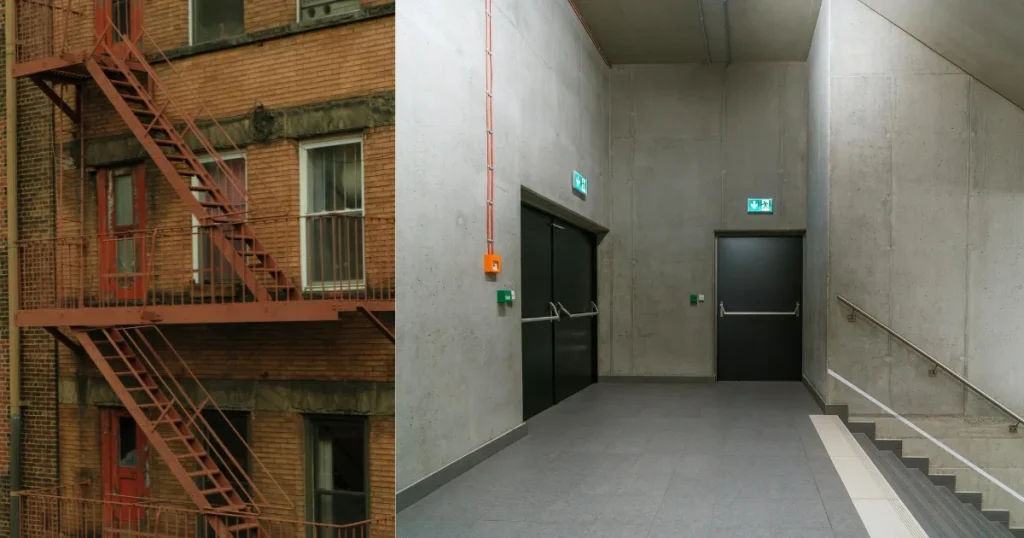
Not every door sold as fire-rated actually meets the standards it claims. This is a genuine problem in the Nepali market, and it is worth understanding before you purchase. You should look for:
Check for recognized certifications first.
Certified fire-rated doors in Nepal should be tested against standards like BS 476 (British Standard), EN 1634 (European Standard), or NBC requirements set by the Department of Urban Development and Building Construction. Any reputable fire-rated door supplier in Nepal should provide test certificates without hesitation. If they cannot, walk away.
Always buy the complete assembly, not just the door.
A certified door leaf fitted into an uncertified frame, or paired with non-rated hardware, is not a certified fire door. The rating applies to the full assembly as tested door, frame, hinges, seals, and closer all together. When speaking to fire-rated door suppliers Nepal, confirm that every component is certified as a unit, not individually.
What You Need to Know Before Fire Door Installation in Nepal?
Even a perfectly manufactured, fully certified fire door will fail in a fire if it is not installed correctly. Fire door installation Nepal is a job for experienced, trained professionals.
Common installation mistakes that compromise fire doors include:
- Gaps between door and frame that are too large for intumescent seals to bridge
- Incorrect hinges that allow the door to sag or misalign over time
- Missing or damaged seals that were not replaced after modification
- Door closers not properly calibrated, leaving the door partially open after use
- Modifications made on-site that were not part of the tested assembly
A fire door that is held open with a wedge or a prop defeats its entire purpose. Every fire door must be fitted with an automatic door closer that ensures the door returns to a closed and latched position after each use.
Professional installation also includes checking the installed door against the original test specifications to confirm nothing has been changed that would affect performance.
Buy Fire-Rated Doors in Nepal from Hitco
-

 Quick View
Hitco supplies and installs certified fire-rated doors in Nepal for commercial, industrial, and residential projects from product selection to professional installation.
- Supply of certified fire-rated steel and wooden doors
- Complete door assembly including frame, seals, and hardware
- Professional fire door installation in Nepal
- Guidance on fire safety regulations and NBC compliance
- Support for commercial, industrial, and residential projects
Fire safety is not something to figure out after a building is complete. Getting the right door, properly certified and correctly installed, is a decision that protects people and property for decades. Hitco makes that process straightforward from the first conversation to the final installation.
Planning a project in Nepal? Get expert guidance on fire-rated doors, compliance, and installation; contact Hitco today. Get in Touch with Hitco
Final Thoughts
Fire-rated doors are one of those things that most people never think about until they really need them. And by that point, it is too late to make a good decision.
Nepal’s urban buildings are getting taller and more complex. The fire risks that come with that growth are real. Compartmentalization through properly rated, certified, and correctly installed fire doors is one of the most reliable tools available for managing those risks.
If you are involved in a building project, whether as a developer, an architect, a contractor, or a building owner, understanding what fire-rated doors actually do and what to look for when specifying them is worth the time.
The right door, properly installed and maintained, works quietly in the background every single day. You never notice it until the moment it matters most.
Ready to protect your building with the right fire-rated doors? Contact Hitco today; our team will help you choose the right door, ensure NBC compliance, and handle installation from start to finish
FAQs: Fire-Rated Doors in Nepal
What is the difference between a fire-rated door and a regular door?
A regular door is built for security and privacy. A fire-rated door is engineered and tested to resist fire and smoke for a defined period; the materials, seals, and hardware are entirely different.
How long do fire-rated doors last?
With proper maintenance, fire doors can last 20–30 years or more. Seals and closers may need replacement earlier and should be inspected regularly.
Are fire-rated doors mandatory in Nepal?
Yes, for certain building types. The Nepal National Building Code requires them in high-rise buildings, hotels, hospitals, and commercial and industrial structures.
What rating do I need for my building?
It depends on where the door is installed and what it is protecting. A fire safety consultant or certified supplier can advise based on your building layout and NBC requirements.
Can I install a fire door myself?
No, installation must be done by trained professionals. Incorrect installation can make a certified fire door completely ineffective in an actual emergency.
What is an intumescent seal, and why does it matter?
It is a strip around the door edge that expands when exposed to heat, sealing the gap between the door and frame. This blocks smoke and toxic gases, which are often more dangerous than the fire itself.
Does any heavy or solid door provide fire protection?
No, weight alone does not make a fire door. Without the right materials, seals, and tested assembly, a heavy door offers no meaningful fire resistance.
Are fire doors only needed in large commercial buildings?
No, multi-story residential apartments also require fire doors between units and shared corridors. The Nepal building code is clear on this for new construction.

