

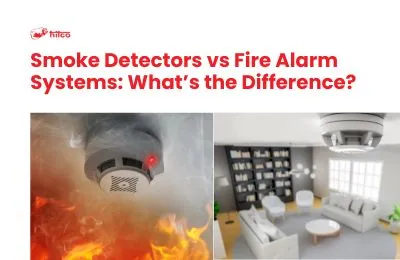
A smoke detector is a single, self-contained device. It detects smoke in its immediate area and sounds a local alarm. A fire alarm system is an entirely different category: a coordinated, building-wide network of detectors, control panels, sirens, strobe lights, and, in many cases, a direct connection to emergency services. Understanding the difference between smoke detectors and fire alarm systems matters more than most people realize.
Both matter. But they serve different purposes, suit different spaces, and come with very different installation, compliance, and maintenance requirements. This guide breaks down about smoke detectors vs fire alarms exactly where each one fits and how to know which your property actually needs.
While both play important roles in keeping your property safe, choosing the right setup depends entirely on your space. You can explore our full range of fire safety products in Nepal.
What Is a Smoke Detector?
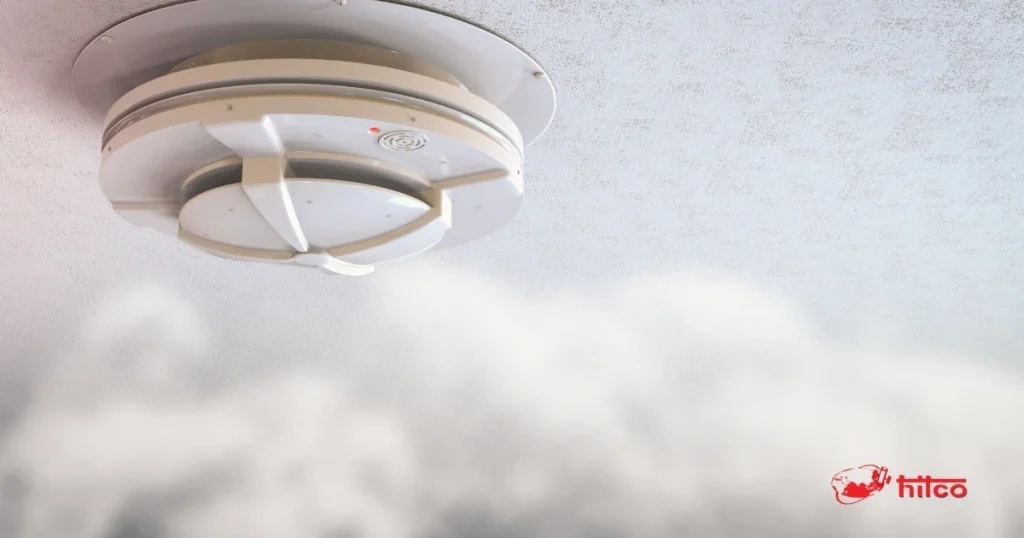
A smoke detector is a standalone safety device designed to detect smoke in the area immediately around it. When smoke particles enter its sensor chamber, it triggers a loud alarm typically around 85 decibels from its built-in siren.
Most homes have them. They’re relatively affordable, easy to install, and widely available.
Smoke detectors are a practical, low-cost first line of defense for residential fire safety here’s why most homes start here:
- Simple and affordable to install
- No professional setup required in most cases
- Battery-operated options need no wiring
- Available in interconnected versions: if one detects smoke, all units in the home sound simultaneously
- Ideal for residential fire alarm systems in homes and apartments
That said, a smoke detector only covers the immediate zone around it. A device in the bedroom doesn’t know what’s happening in the kitchen or garage.
Because they operate independently, standalone smoke detectors are an excellent, budget-friendly choice for residential properties. For more tips on setting up a safe household, read our guide on choosing a fire extinguisher for home in Nepal.
What Is a Fire Alarm System?
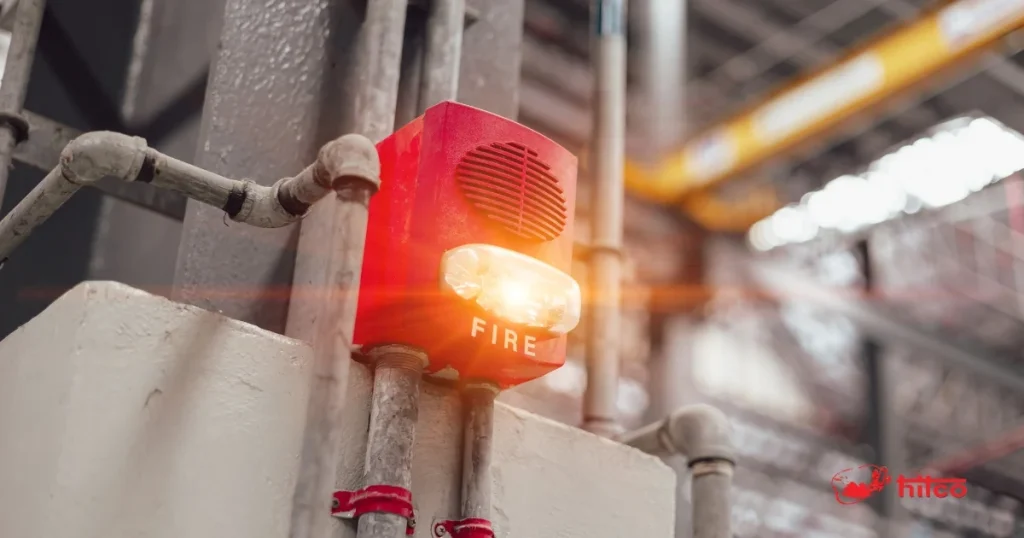
A fire alarm system is a complete, integrated network of sensors, control equipment, and alert mechanisms all working together to protect an entire building, not just a single room.
When one detector senses smoke or heat, it signals a central control panel, which then activates building-wide sirens and strobes, shuts down HVAC systems to stop smoke from spreading, unlocks emergency exits, and in most setups, automatically contacts emergency services.
One reacts locally. The other responds intelligently across an entire building.
Unlike standalone smoke detectors, a fire alarm system delivers coordinated, building-wide protection, making it the standard for any property where safety and compliance cannot be compromised.
- Full-building coverage, regardless of property size
- Automatic emergency notification in most commercial setups
- Visual alerts for hearing-impaired occupants
- Compliance with building codes for commercial and large-scale residential properties
- Lower insurance premiums in many cases when a monitored system is in place
- Designed to meet national and international safety standards
For any property beyond a standard home, a fire alarm system isn’t just a better choice; it’s the required one. Check out our checklist on selecting a fire extinguisher for commercial use in Nepal to see how to pair your alarm network with the right physical suppression tools.
What's the Difference Between Smoke Detectors And Fire Alarm Systems?
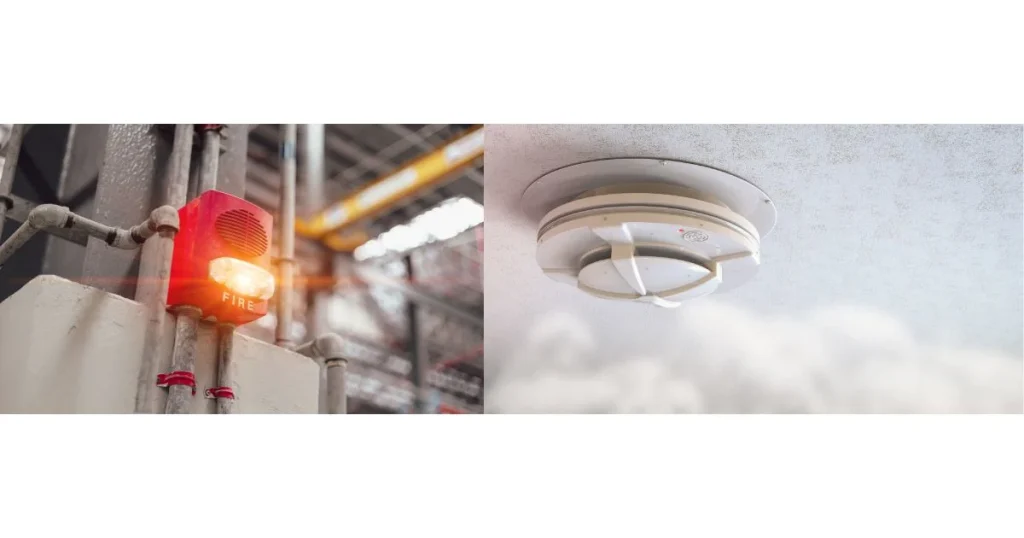
The simplest way to understand it is this: a smoke detector protects a room, and a fire alarm system protects a building. But the differences go deeper than just coverage. Here is a breakdown of what actually sets them apart.
Coverage
A smoke detector only monitors the air in its immediate surroundings. If smoke builds up in your kitchen, the detector in your bedroom has no idea. A fire alarm system uses multiple sensors placed throughout the entire building. When any one of them triggers, the whole system responds, not just the corner where the fire started. This is the most fundamental difference in smoke detectors vs fire alarm systems.
Components
A smoke detector is a single, self-contained unit. It has a sensor, a small circuit board, and a built-in buzzer. That is it.
A fire alarm system is an entirely different category. It includes multiple detectors, a central control panel that processes every signal, sounders, strobe lights for visual alerts, and, in most setups, a communication module that contacts emergency services automatically. Every component works together as one coordinated system.
Types
Not all smoke detectors work the same way. There are three main types, and each one is suited to a different environment.
- Ionization Detectors: Faster at detecting fast-flaming fires. More common in homes but prone to false alarms from cooking smoke.
- Photoelectric Detectors: Better at detecting slow-burning, smoldering fires. Less likely to false alarm from everyday cooking steam or dust.
- Dual-Sensor Detectors: Combines both ionization and photoelectric technology in one unit. The most reliable choice for most residential settings.
Fire alarm systems can incorporate all three detector types across different zones of a building, selecting the most appropriate sensor for each area based on its function and risk level.
Alert Range
When a smoke detector goes off, it produces a local alarm, typically around 85 decibels, audible only in the immediate area. If you are at the other end of a large building or a heavy sleeper in a room with a closed door, you may not hear it in time.
A fire alarm system triggers building-wide audio and visual alerts simultaneously. Every floor, every corridor, every room receives the signal at the same time, giving every occupant a fair chance to evacuate safely.
Interconnectivity
A standalone smoke detector operates entirely on its own. If it goes off, only that unit makes noise. Nobody in the rest of the building is alerted unless they happen to hear it.
Interconnected smoke detectors are a step up. When one unit detects smoke, all connected units sound simultaneously. This is a practical upgrade for larger homes and is now required in new builds in many regions. However, interconnected smoke detectors still have no central panel, no monitoring, and no automatic emergency notification.
A fire alarm system goes further still. Every detector feeds into a central control panel that manages the entire response, logs the event, identifies the exact zone that triggered, and initiates the appropriate building-wide actions. It is not just interconnected; it is intelligent.
Emergency Notification
A smoke detector makes noise. That is where its job ends. It cannot call anyone, alert a monitoring center, or contact emergency services. The response depends entirely on whoever hears it.
A monitored fire alarm system removes that dependency. The moment an alert triggers, the system automatically notifies emergency services or a 24/7 monitoring center, even if no one in the building is awake or present. In large facilities, those extra minutes can be the difference between a contained incident and a catastrophic one.
Power Source
Smoke detectors typically run on one of three power configurations. Battery-operated models are the most common and easiest to install, but they depend entirely on the battery being functional and replaced on time. Hardwired models connect directly to the building’s mains electricity, removing the battery dependency but requiring an electrician to install. Hardwired models with battery backup are the most reliable option for homes, as they continue to function even during a power cut.
Fire alarm systems run on mains power with a dedicated backup battery built into the control panel. This ensures the system remains fully operational during power failures, which is a critical requirement for commercial and regulated properties.
False Alarm Sensitivity
Smoke detectors, particularly ionization models, are sensitive to everyday activities like cooking, steam from showers, or dust from renovation work. A false alarm from a standalone detector is an inconvenience. A false alarm from an interconnected setup means every unit in the building goes off at once.
Fire alarm systems address this through intelligent control panels that can filter and assess signals before triggering a full building response. Some systems use multi-sensor detectors that cross-reference heat, smoke, and carbon monoxide readings before activating. This significantly reduces false alarms without compromising genuine detection, which matters enormously in busy commercial environments where unnecessary evacuations are costly and disruptive.
Installation
Most smoke detectors are designed for straightforward installation. Battery-powered models require no wiring at all, and hardwired versions are manageable for a qualified electrician. No specialist design is needed.
A fire alarm system requires professional assessment before a single device is installed. An engineer has to map the building layout, calculate sensor placement for full coverage, design the cable routes, configure the control panel, and commission the system to ensure everything functions correctly together. It is not a DIY job, and it should not be.
Maintenance
Smoke detectors need monthly testing, annual battery replacement, and a full unit replacement every ten years as the sensors lose sensitivity over time. Simple, but easy to neglect.
Fire alarm systems require scheduled servicing by a qualified engineer, typically twice a year for commercial fire alarm systems and quarterly for regulated environments like hospitals and schools. Every detector, sounder, panel connection, and communication link needs to be checked and logged. Skipping this is not just a safety risk; in many cases, it is a compliance violation.
Cost
A smoke detector costs very little upfront and has minimal ongoing expense. For a single home or apartment, it is an accessible and practical solution.
A fire alarm system involves a higher initial investment covering equipment, professional installation, cabling, and commissioning. However, the cost scales with the size of the property, and for commercial buildings it often reduces insurance premiums enough to offset a significant portion of the expense over time.
Legal Compliance
When it comes to smoke detectors vs fire alarm systems, legal compliance is often what makes the decision for you. Smoke detectors satisfy basic residential fire safety codes in most regions. For a standard home or small apartment, they meet the legal minimum.
Fire alarm systems are legally required for commercial properties, schools, hospitals, hotels, and large residential buildings in most countries. Standalone smoke detectors do not satisfy these requirements, regardless of how many you install. If your property falls into a regulated category, a certified fire alarm system is not optional.
Related Read: Running a workplace or managing a commercial property? Don’t leave your safety to chance. Read our essential breakdown on the Top Fire Safety Equipment Every Business Must Have.
Quick Comparison: Smoke Detectors vs Fire Alarm Systems
Still weighing up the two? Here is a side-by-side look at how they compare across every key factor.
Feature | Smoke Detector | Fire Alarm System |
Coverage | Single room or zone | Entire building |
Components | One standalone device | Detectors, panel, sounders, strobes, comms |
Alert Range | Local siren (~85dB) | Building-wide audio and visual alerts |
Emergency Notification | No | Yes, in monitored systems |
Power Source | Battery or hardwired | Mains power with backup battery |
False Alarm Risk | Higher, especially ionization models | Lower, due to intelligent panel filtering |
Interconnectivity | Optional, no central panel | Full central panel with zone identification |
Installation | DIY-friendly | Requires professional design and installation |
Maintenance | Battery checks and occasional testing | Regular professional testing and servicing |
Cost | Low upfront | Higher but scales with property size |
Best Suited For | Homes, apartments, small spaces | Commercial buildings, schools, hospitals, large homes |
Legal Compliance | Basic residential codes | Required for commercial and large residential properties |
The right choice is not about preference. It is about what your property type, occupancy, and local compliance requirements actually demand.
Whether you rely on independent detectors or a building-wide network, regular testing is non-negotiable to ensure the sensors haven’t expired or gathered dust. Pair your system checks with professional maintenance by tracking your fire extinguisher refilling and maintenance in Nepal schedule.
Smoke Alarm vs Fire Alarm System: Which Is Right for Your Property in nepal?
The right fire safety system depends entirely on your property type, size, and how many people it accommodates. Here is a straightforward breakdown to help you decide.
1. Small Residential Homes & Apartments
- The Right Choice: Interconnected Smoke Detectors
- Why: Single standalone units are risky, a ground-floor kitchen fire won’t trigger a top-floor bedroom alarm. Interconnected detectors link together. When one senses danger, all units ring simultaneously, buying critical exit time for narrow residential homes in Kathmandu.
2. Large Private Residences & Multi-Storey Bungalows
- The Right Choice: Zone-Based Residential Fire Alarm Systems
- Why: Large properties with detached structures (like guardhouses or separate kitchens) need centralized tracking. A small central panel provides zone awareness, instantly flashing the exact floor or room that triggered the alert.
3. Corporate Offices, Retail Spaces, & Warehouses
- The Right Choice: Certified Commercial Fire Alarm Systems
- Why: Standalone detectors do not meet legal compliance codes for businesses. Commercial networks feature dual heat/smoke sensors to prevent false alarms from office pantries or warehouse dust. They include dedicated central backup batteries to stay fully functional during power cuts.
4. Hotels, Schools, & Hospitals
- The Right Choice: Addressable Building Fire Protection Systems
- Why: These high-occupancy spaces house people who may be asleep, unfamiliar with exits, or vulnerable. Intelligent addressable networks pinpoint the precise room number of a threat for emergency responders. They combine loud audio hooters with visual strobe lights to maximize fire alarm system benefits and meet national safety codes.
Why Choose Hitco for Your Fire Safety Needs in Nepal?
-
 Quick View
 -
 Quick View
 -
 Quick View
 -
 Quick View
 -
 Quick View
 -
 Quick View
Not sure where to get the right fire safety system in Nepal or whether what you’re buying is genuine, compliant, and properly supported after installation? That’s exactly where Hitco comes in.
- Trusted since 1975: over four decades of experience serving homes, businesses, hospitals, and commercial facilities across Nepal
- Authorised distributor: of globally recognised brands including Ceasefire, Safe Pro, New Age, and AGNI
- Complete fire safety range: smoke detectors, fire alarm systems, fire extinguishers, hose reels, and gas-based suppression systems, all under one roof
- Genuine products: no grey market imports, only certified equipment that meets safety standards
- Expert guidance: we help you choose the right system for your property type and compliance requirements
- Reliable after-sales support: installation assistance and servicing from a team that knows the products inside out
Fire safety is not a decision to make based on price alone; it’s a decision to make based on trust. With Hitco, you get both.
Need fire safety products you can truly trust for your home or business? Choose Hitco Nepal for certified fire protection systems backed by expert support and decades of experience.
Final Thoughts
The smoke alarm vs fire alarm system debate ultimately comes down to one thing: scale and responsibility.
A smoke detector is reliable, affordable, and effective for localized protection the right starting point for any home. But it only covers where it’s placed and can’t coordinate a building-wide response.
A fire alarm system is built for bigger responsibilities. It operates at the building level, not the room level, and is the standard for commercial spaces, large facilities, and any property with complex safety requirements.
If you’re not sure which setup is right for your property, a proper assessment is always worth arranging. The difference between adequate and genuinely protected is worth taking seriously.
Ready to protect your home, office, or commercial building with the right fire safety system? Contact Hitco today for expert guidance, certified products, and reliable support.
FAQs
Is a smoke detector the same as a fire alarm?
No. A smoke detector detects smoke in its immediate area, while a fire alarm system is a complete building-wide network that does far more than trigger a local alert.
Can I use smoke detectors instead of a fire alarm system in a commercial building?
In most cases, no commercial buildings are legally required to have certified fire alarm systems, and standalone smoke detectors do not satisfy these requirements.
How often should smoke detectors be tested?
Monthly testing is recommended, with batteries replaced at least annually. Replace the full unit every 10 years as sensors degrade over time.
How often should a fire alarm system be serviced?
At least twice a year by a qualified engineer and quarterly in regulated environments such as hospitals and schools.
Do fire alarm systems reduce insurance premiums?
In many cases, yes, a monitored fire alarm system lowers the insurer’s risk assessment, which often translates to reduced premiums for commercial properties.
What's the difference between a heat detector and a smoke detector?
A smoke detector reacts to airborne smoke particles, while a heat detector triggers when room temperature exceeds a set threshold, making it better suited for kitchens, garages, and dusty environments.

