

To service a fire extinguisher in Nepal, you should perform a visual check yourself every month, get a professional inspection once a year for the fire extinguisher, and refill the unit every 3 to 5 years (even if unused). Additionally, the cylinder must undergo a hydrostatic pressure test every 5 years to ensure it remains safe and functional.
Owning a fire extinguisher is a significant initial step, but merely possessing one is insufficient. An unmaintained unit sitting in a corner for years provides a false sense of security; even if the gauge looks green, internal components can fail over time.
A fire emergency is the worst time to discover your equipment doesn’t work. Let’s look at the essential service timelines in Nepal to ensure your home or business remains truly protected.
Why Servicing a Fire Extinguisher Matters in Nepal
A fire extinguisher might look perfectly functional sitting on your wall, but internal degradation is often invisible. In Nepal’s specific environment, regular servicing is the only way to guarantee the device will perform when a life-threatening emergency occurs.
- Prevents Powder “Caking”: Keeps dry chemicals from clumping due to Nepal’s monsoon humidity so they flow freely.
- Detects Hidden Leaks: Identifies slow pressure loss that a simple gauge check might miss.
- Stops Corrosion: Prevents rust and cylinder damage caused by local dust and moisture.
- Ensures Mechanical Function: Guarantees that the pin, hose, and nozzle aren’t blocked or stuck.
- Guarantees Compliance: Meets mandatory fire safety standards for building audits and insurance.
- Verifies Chemical Life: Confirms the fire-fighting agent hasn’t expired or lost its potency.
Breakdown of Fire Extinguisher Service Timelines in Nepal
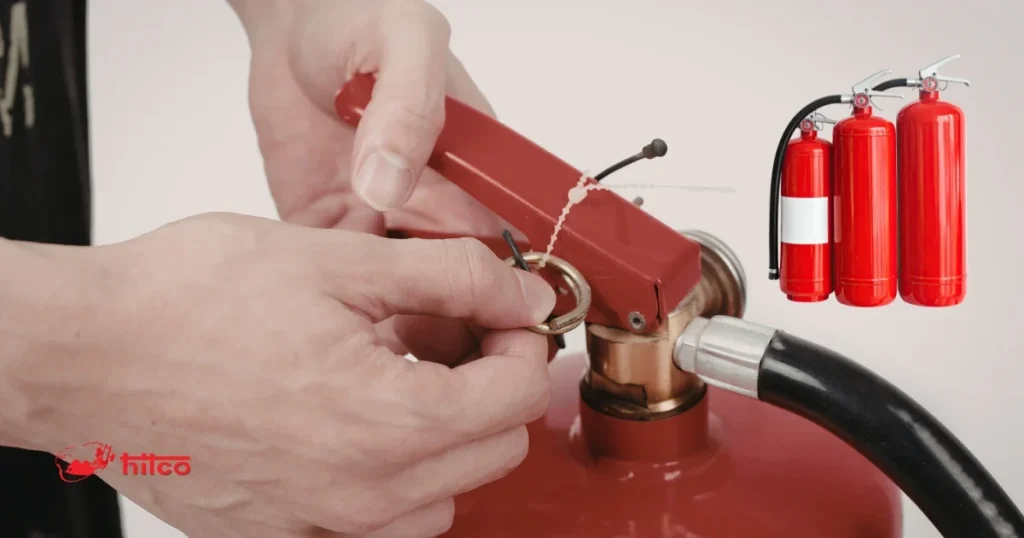
Most people think servicing is a one-time thing. It’s not. There are different levels of checks, each serving a specific purpose. Here’s what’s commonly followed in Nepal:
Monthly Visual Check (Do It Yourself)
Every month, take 60 seconds to look at your extinguisher:
- Is the pressure gauge needle pointing to the green zone?
- Is the pin and tamper seal intact?
- Are there any visible dents, rust, or damage?
- Is it in its designated spot, easy to reach?
This isn’t a full service. It’s just a quick check to make sure nothing obviously wrong has happened. You can do this yourself; no technician needed. And if you’re not even sure what type of extinguisher you have, this guide on ABC fire extinguisher uses in Nepal will make things much clearer.
Annual Professional Inspection
Once a year, a certified technician should inspect the extinguisher properly. This is where fire extinguisher servicing frequency in Nepal becomes important to get right, and understanding the full fire safety service process helps you know exactly what professionals check.”
The technician will:
- Check the internal pressure properly
- Inspect valves, hoses, and the discharge mechanism
- Verify the label and date stamps
- Check whether the agent inside is still in good condition
This is standard practice for offices, buildings, hotels, schools, and any place that follows fire safety guidelines in Nepal.
Every 5 Years: Hydraulic (Pressure) Test
Every five years, most extinguisher types need a pressure or hydrostatic test. This tests whether the cylinder itself is still structurally safe under pressure.
It’s not always talked about, but it’s part of a proper fire extinguisher maintenance schedule Nepal should be following more seriously, especially if you look into detailed guides on fire extinguisher maintenance in Nepal and how long-term safety is managed.
Quick Reference: Fire Extinguisher Maintenance Schedule in Nepal
Servicing isn’t just one thing; it happens at different levels and different intervals. Some you can do yourself; some need a professional. Here’s the simple breakdown:
Frequency | What to Do |
Every Month | Visual check (pressure, seal, location) |
Every Year | Professional inspection and service |
Every 3–5 Years | Refill (even if unused) |
Every 5 Years | Pressure/hydrostatic test |
Every 10–12 Years | Full replacement |
When Should You Refill or Replace a Fire Extinguisher?
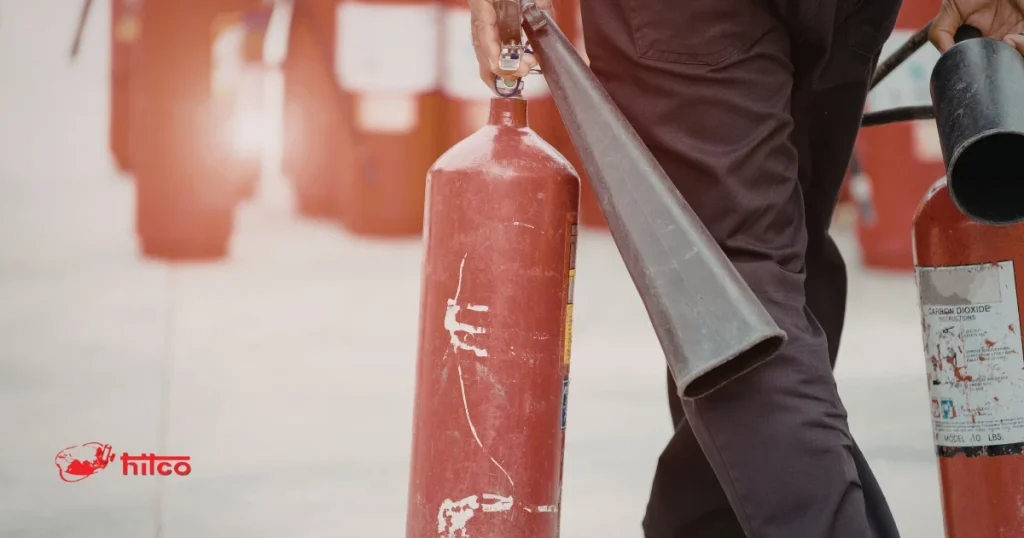
In Nepal, many people assume that if an extinguisher hasn’t been used, it’s still “good as new.” This is a dangerous mistake. There is a clear difference between a unit that needs a quick refill and one that is a safety hazard and must be replaced.
When to Refill (Recharge) Your Extinguisher
Refilling is the process of topping up the extinguishing agent and re-pressurizing the cylinder. You should refill your unit if:
- Immediately After ANY Use: Even if you only squeezed the handle for one second, the internal seal is now broken. The propellant gas will leak out within hours, leaving the unit empty when you actually need it.
- Pressure Drop: If your monthly check reveals the needle has moved into the red zone (low pressure), it needs an immediate professional recharge.
- Scheduled Maintenance: For the common ABC Dry Powder units used in Nepal, the powder can clump or “cake” due to humidity. To ensure it flows smoothly, a refill is recommended every 3 to 5 years.
- Weight Loss: For CO₂ extinguishers (which don’t have gauges), a refill is required if the unit weighs significantly less than the “Gross Weight” stamped on its shoulder.
Recommended Read: Fire Extinguisher Refilling and maintenance in Nepal
When to Replace Your Extinguisher
Sometimes, a refill isn’t enough. You must replace the entire unit entirely if you notice the following:
- Structural Damage: Deep rust, corrosion on the cylinder, or large dents are red flags. Nepal’s monsoon humidity often causes rust at the base of the cylinder—if the metal is pitted, it could explode under pressure.
- Failed Hydrostatic Test: If your cylinder fails its 5-year pressure test, it is legally and physically condemned.
- Obsolete Age: Most extinguishers have a maximum service life of 10 to 12 years. If your unit was manufactured over a decade ago (check the stamp on the body), the internal components like O-rings and valves are likely too degraded to trust.
- Missing Labels: If the manufacturer’s instructions or the maintenance history tag are missing or unreadable, the unit cannot be safely serviced and should be replaced.
Do Fire Extinguishers Expire in Nepal?
Yes, they do. This surprises people.
Do fire extinguishers expire in Nepal? Absolutely. The extinguishing agent inside has a usable lifespan. The cylinder itself has a service life, usually around 10 to 12 years for most models. After that, it should be replaced entirely, not just refilled, and understanding the different types of fire extinguishers can help you choose and maintain the right one.”
Always check the manufacturing date stamped on the body. If it’s old and hasn’t been serviced regularly, don’t assume it works.
What Are the Servicing Rules for Fire Extinguishers in Nepal?
Nepal follows fire safety standards guided by the Department of Mines and Geology and fire service guidelines. While specific national legislation on fire extinguisher servicing isn’t always rigidly enforced everywhere, here’s what fire extinguisher servicing rules in Nepal typically require in practice:
- Annual inspection by a certified fire safety professional
- Proper documentation and service tags on each unit
- Mandatory servicing for commercial properties, hotels, hospitals, factories, and public buildings
- Compliance during building safety audits and inspections
If you’re running a business and your building gets audited, uninspected extinguishers can cause real problems. So it’s not just about safety; it’s also about being legally covered, which becomes easier when you understand overall fire safety and prevention in Nepal and how compliance works.
Avoid Common Mistakes While Servicing Fire Extinguishers in Nepal
Most fire extinguisher problems in Nepal aren’t about bad products; they’re about bad habits. People buy one, put it on the wall, and completely forget it exists.
Here are the most common mistakes to avoid:
- Buying once, forgetting forever. A lot of offices in Nepal have extinguishers installed years ago and never touched. That’s not safety, that’s false security.
- Only refilling after use. Even if you’ve never used it, the agent inside still degrades. Get it checked anyway.
- No service record. If there’s no tag or date on the extinguisher, you genuinely don’t know when it was last serviced. That’s a red flag.
- Storing it in the wrong place. Near direct heat, in a locked cabinet, or behind stuff are all common mistakes that make your extinguisher useless in an emergency.
Any one of these mistakes can cost you in a real emergency. They’re all easy to fix – it just takes a little awareness and a proper servicing routine.
How to Find a Reliable Fire Extinguisher Service Company in Nepal?
This is honestly where people get stuck. Not every vendor offering servicing is doing it properly.
When looking for a fire extinguisher service company in Nepal, check for the following:
- Experience with multiple extinguisher types (dry powder, CO₂, foam, water)
- Proper certification or authorization
- Ability to provide a service record or tag
- Transparent pricing before the job
Word of mouth still works well in Nepal. Ask other business owners or your building management who they use. And always ask for a service report in writing.
Choose Hitco for Servicing Your Fire Extinguisher in Nepal
-
 Quick View
 -
 Quick View
 -
 Quick View
 -
 Quick View
 -
 Quick View
 -
 Quick View
 -
 Quick View
 -
 Quick View
With over 50 years of experience, Hitco is Nepal’s most trusted name in fire safety. We provide more than just a refill; we ensure your equipment is reliable and compliant with local standards.
- Certified Expertise: Our technicians provide professional inspections that meet building audit requirements.
- Genuine Quality: As authorized partners for brands like SRI and Ceasefire, we use only high-grade agents and genuine spare parts.
- Complete Solutions: From annual servicing and refilling to hydrostatic pressure testing, we manage it all.
- Nationwide Reach: We offer reliable support and quick turnaround times across Nepal.
Final Thoughts
Fire extinguisher maintenance is easy to ignore until it’s the only thing that matters. In Nepal, staying ahead of service schedules gives you a massive advantage in an emergency.
The rule is simple: check it monthly, inspect it annually, and refill it every few years. It’s a small investment in time and cost that makes a life-saving difference when things go wrong. Don’t wait for a disaster to regret a missed service to ensure your safety today.
Don’t leave safety to luck. Contact us today to service your fire extinguisher because in an emergency, there’s no second chance.
FAQs
Can I service a fire extinguisher myself in Nepal?
No. Monthly visual checks are fine, but actual servicing must be done by a certified technician. DIY servicing won’t be recognized during official audits.
What happens if a fire extinguisher is not serviced on time?
It can fail during an emergency. Pressure drops, powder compacts, or valves block. You pull the pin and nothing comes out.
Which type of fire extinguisher is best for home use in Nepal?
A 1–2 kg ABC dry powder extinguisher. It’s affordable, easy to use, and covers most common fire types, including electrical and flammable liquids.
How do I know if my fire extinguisher has already been discharged?
Check the pressure gauge. If the needle is in the red zone or the safety pin is broken, it needs immediate servicing.
Does a fire extinguisher need to be replaced after being used once?
Not replaced, but it must be refilled and inspected before use again. Never put a used extinguisher back without servicing it first.
How many fire extinguishers does a building in Nepal legally need?
Minimum one per floor for small buildings. Larger commercial buildings need more, based on fire safety audit requirements.
What should I do with an old fire extinguisher that can no longer be serviced?
Don’t throw it in regular trash. Contact your service provider like Hitco Nepal; we can safely depressurise and dispose of it properly.
Do fire extinguishers need to be tagged after every service in Nepal?
Yes. Every inspection or refill should include a service tag showing the date and next due date. No tag means it’s overdue.

