

Fire accidents don’t send a warning. One moment everything is fine, and the next, smoke is filling a hallway or a kitchen is on fire. Happens faster than most people realize.
The scary part? A lot of homes and businesses in Nepal still don’t have any kind of fire detection set up. No alarm. No detector. Nothing.
A fire alarm system is basically your early warning guard; it works 24/7, doesn’t take breaks, and can alert everyone in a building before a small fire becomes a disaster. Whether you’re protecting a single room or an entire hotel, there’s a system that fits.
This guide breaks everything down in plain language: the types of fire alarm systems in Nepal, what each one does, key features to look for, and real pricing to help you plan your budget.
Quick Summary
There are three main types of fire alarm systems in Nepal, and picking the right one depends on your building size and budget. Here’s the quick breakdown:
- Fire alarm systems in Nepal come in three main types: conventional, addressable, and wireless
- Prices range from around NPR 1,700 for basic components to NPR 470,000+ for advanced panels
- Key parts include smoke detectors, heat detectors, manual call points, and control panels
- Best for homes: Conventional systems simple, affordable, gets the job done
- Best for large buildings: Addressable systems smarter and more accurate
- Popular brands in Nepal include Agni, Ravel, and Honeywell
- Always look for systems with battery backup power; power cuts are common in Nepal
What Is a Fire Alarm System?
A fire alarm system is a network of sensors and devices installed in a building to detect fire, smoke, or heat and alert people before the situation gets out of control.
Think of it like a security guard that never sleeps and never gets distracted.
It uses detectors placed around a building to pick up early signs of fire. When something is detected, it triggers an alarm sound, light, or both to warn everyone inside. Some advanced systems can also alert a monitoring center or security personnel automatically.
The whole point is early detection. A fire caught in the first few minutes is manageable. The same fire 10 minutes later, much less so.
That’s why having a proper fire detection system in Nepal matters more than people often think. Understanding the different types of fire alarm systems available is the first step to choosing the right protection for your space.
Explore Hitco’s certified fire safety equipment & alarm systems to find the right fit for your home or office.
Types of Fire Alarm Systems in Nepal
There are three main types of fire alarm systems used in Nepal: conventional, addressable, and wireless. Each works differently and suits different building sizes and budgets.
1. Conventional Fire Alarm System
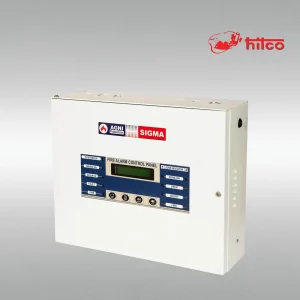
Best for: Homes, small offices, shops, schools
This is the most common type used in Nepal, especially for smaller properties.
A conventional system divides your building into zones, say, ground floor, first floor, and second floor. When an alarm is triggered, the control panel tells you which zone has the issue, but not the exact device or location.
It’s simple, reliable, and budget-friendly. For a home, a small shop, or a modest office, a conventional fire alarm system setup in Nepal is usually more than enough. Most conventional panels come in 2-zone or 4-zone configurations, which covers the majority of small to medium-sized buildings.
2. Addressable Fire Alarm System
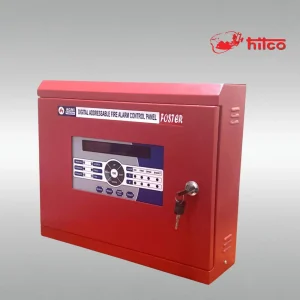
Best for: Hotels, hospitals, factories, large office buildings, multi-story complexes
This is the smarter version. Instead of just showing you a zone, an addressable fire alarm system in Nepal setup tells you the exact device that triggered the alarm down to the specific detector on a specific floor or corridor.
Every device in an addressable system has its own unique address, so the control panel knows exactly what’s happening and where. This is a big deal in a hotel, hospital, warehouse, or any building with multiple floors and hundreds of rooms.
Yes, it costs more. But for large, complex buildings, the accuracy is worth every rupee. It also reduces false alarms and makes maintenance a lot easier.
3. Wireless Fire Alarm System
Best for: Old buildings, rented properties, quick setups, spaces where wiring is difficult
No drilling, no running cables through walls: a wireless fire alarm system in Nepal uses radio signals to connect all the devices to the control panel.
This makes it ideal for old buildings where adding new wiring is a nightmare or for spaces that are already finished and you don’t want to tear up walls. Installation is faster and cleaner.
The trade-off is that wireless systems depend on batteries and radio signals, so regular battery checks are important. But for many setups in Nepal, especially older commercial buildings or rented spaces, it’s a very practical option.
Combination Detector Systems
Some systems use combination detectors that can sense smoke, heat, and carbon monoxide at the same time. These are more accurate and reduce false alarms significantly, which is useful in places like kitchens, workshops, or industrial spaces where heat and dust can sometimes trigger standard detectors incorrectly.
Higher cost, but better performance in tricky environments.
For industrial setups that need more than just alarms, Hitco also carries a gas-based fire suppression system for high-risk environments like server rooms and factories.
Key Components of Fire Alarm Systems
Every one of the types of fire alarm systems is made up of the same five core components: smoke detectors, heat detectors, manual call points, a control panel, and alarm sounders. Each part has a specific job, and the system only works properly when all of them are in place.
1. Smoke Detectors
The most common detection device in any fire alarm system. There are two main types, and they work differently:
- Ionization detectors: better at catching fast, flaming fires where there’s a lot of heat and visible flame
- Photoelectric detectors: better at detecting slow, smouldering fires that produce thick smoke before any flame appears
For most homes and offices in Nepal, photoelectric detectors are the more reliable everyday choice. They’re less prone to false alarms from cooking or dust.
2. Heat Detectors
Instead of detecting smoke, heat detectors respond to a rise in temperature beyond a set threshold. They’re the right choice for kitchens, garages, boiler rooms, and dusty workshops anywhere that smoke detectors would constantly false-alarm due to steam, fumes, or airborne particles.
They’re not a replacement for smoke detectors but work best alongside them in specific areas.
3. Manual Call Points (MCP)
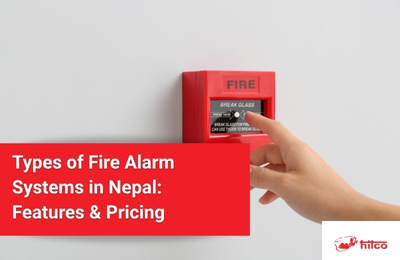
Also called break-glass points, these are the red wall-mounted boxes you see in most commercial buildings. During an emergency, anyone nearby can break the small glass panel and instantly trigger the alarm; no waiting for a detector to pick something up.
They’re a simple but critical backup. In a fast-moving fire situation, a person spotting flames can activate the alarm seconds before any sensor would.
4. Control Panel
The control panel is the brain of the entire system. It constantly monitors every connected device, detector, call point, and sounder, and the moment something is triggered, it processes the signal and activates the alarm output.
On conventional panels, it shows which zone is affected. On addressable panels, it shows the exact device. Either way, it’s the central point where everything is managed and monitored. Fire alarm panel prices in Nepal vary by type and capacity, covered in detail in the pricing section below.
5. Alarm Sounders and Strobe Lights
These are the output devices, the part that actually alerts people inside the building. Sounders produce loud audio alerts that can be heard across floors and corridors, while strobe lights give a strong visual warning for people who are hearing-impaired or working in environments too noisy to hear a siren clearly.
A good setup uses both together for maximum coverage.
Key Features to Look For in Fire Alarm Systems
The key features to look for across all types of fire alarm systems are zonal mapping, battery backup, device capacity, LCD display, silence and reset functions, and standard compliance. These features determine how reliable and useful your system will be when it actually matters.
- Zonal Mapping: Even a basic 2-zone or 4-zone setup tells you roughly where a fire has started. Without it, you’re just getting an alarm with no direction. Don’t buy a panel without it.
- Battery Backup: Power cuts are a reality in Nepal. Your fire alarm system needs a backup battery that keeps everything running during outages. This is non-negotiable, not an optional extra.
- Device Capacity: Conventional systems typically support 25–30 devices per zone. Addressable systems can handle 99+ devices per loop. Match the system capacity to your building size; buying undersized means you’ll hit the limit fast.
- LCD Display and LED Indicators: A clear display makes it much easier to read the panel at a glance, especially during a stressful emergency when every second counts.
- Silence and Reset Functions: Essential for routine testing and maintenance. Without them, every test becomes unnecessarily disruptive.
- Standard Compliance: Look for systems that meet EN 54 or UL standards. Certified products are more reliable, better tested, and often required for commercial buildings by local regulations.
At the end of the day, a fire alarm system is only as good as its weakest feature. Don’t compromise on these basics just to save a few thousand rupees; it’s genuinely not worth it.
For a broader look at fire prevention and protection beyond just alarms, check out complete fire safety guide.
Top Fire Alarm Systems and Their Price Offered by Hitco in Nepal
Hitco Pvt. Ltd. is one of Nepal’s most trusted suppliers of fire safety equipment, carrying the full range of Agni fire alarm products from individual components to complete panel systems. Here’s a real breakdown of fire alarm prices in Nepal based on their product lineup.
Basic Component Prices
Component | Price (NPR) |
1,750 | |
2,200 | |
2,700 | |
2,000 |
These are the core building blocks of any fire alarm setup. For a basic home or small office, a handful of these components plus a panel is all you need to get protected.
Control Panel Prices
Panel Type | Price (NPR) |
14,000 | |
24,000 | |
Price on request |
The conventional panels are the most accessible option for homes and small commercial spaces. The addressable fire alarm system Nepal panels cost more, but for a large hotel or hospital, that investment is justified by the accuracy and control you get.
Which Fire Alarm System Is Right for You?
The right choice among the types of fire alarm systems depends on the size of your building, how many people use it, and your budget. As a general rule, conventional systems work best for homes and small spaces, while addressable systems are the right choice for large or complex buildings.
For Homes
Lorem ipsum dolor sit amet, consectetur adipiscing elit. Ut elit tellus, luctus nec ullamcorper mattis, pulvinar dapibus leo.
For Offices and Shops
A conventional system works fine for smaller spaces. Medium-sized offices might benefit from a 4-zone panel to better pinpoint where a problem is. For multi-floor commercial buildings, a small addressable setup starts making more sense.
For Large Buildings
No question, an addressable fire alarm system in Nepal is the right call. Hotels, hospitals, schools, and factories need the precision, scalability, and control that only addressable systems offer. The higher cost is the cost of proper protection for a building with hundreds of people inside.
Fire Alarm Systems Available at Hitco in Nepal
-
 Quick View
 -
 Quick View
 -
 Quick View
 -
 Quick View
Why Choose Hitco for Fire Alarm Systems in Nepal?
Hitco has been in the fire safety space for over 40 years, supplying and supporting fire safety systems across Nepal for homes, offices, and large commercial buildings. Here’s why they stand out:
- 40+ Years of Experience: Decades of working across different building types, regulations, and market changes mean we know what works and what doesn’t.
- Globally Recognized Brands: We work with certified products from trusted names like Agni, Cease Fire,Safe Pro, and New Age, not cheap uncertified alternatives.
- Complete Product Range: From individual components like smoke detectors and manual call points to full conventional and addressable panel setups, everything is available in one place.
- After-Sales Support: Hitco doesn’t disappear after the sale. Installation, servicing, and troubleshooting are part of the deal, which matters a lot with safety equipment.
- Nationwide Reach: We supply fire safety solutions across Nepal, making us a reliable option whether you’re in Kathmandu or outside the valley.
If you’re comparing suppliers for fire alarm installation in Nepal, Hitco is worth contacting, especially for larger or more complex projects where experience with addressable systems and proper zoning makes a real difference.
Final Thoughts
Here’s the honest truth: a fire alarm system is one of those things that feels unnecessary right up until the moment it isn’t. Most people don’t think about fire protection until something happens: a neighbor’s house, a building in the news, or a close call. By then, they wish they’d set something up earlier.
The good news is it doesn’t have to be expensive or complicated. A regular home in Nepal can be protected with a basic conventional system and a small panel for a reasonable budget. Larger buildings cost more, but they’re also protecting more people.
Don’t over-engineer a small home setup, and don’t under-protect a large building to save money. Get proper advice, use certified products, hire a qualified technician, and test the system regularly. Whatever your building size, knowing the types of fire alarm systems available and matching one to your actual needs is what separates real protection from a false sense of security.
Still unsure which fire alarm system suits your needs? Contact Hitco today for expert advice and the right recommendation for your needs.
FAQs
What is the best fire alarm system in Nepal?
For homes and small spaces, a conventional system is the best balance of cost and reliability. For hotels, hospitals, and large commercial buildings, an addressable system is the better choice because it shows the exact location of the alarm.
What is the fire alarm price in Nepal?
Basic components like smoke detectors start from NPR 250–2,200. Control panels range from NPR 14,000 for a 2-zone conventional panel to NPR 470,000+ for advanced addressable panels. Total system cost depends on building size, number of devices, and installation.
What are the different types of fire alarm systems available in Nepal?
The three main types of fire alarm systems in Nepal are conventional, addressable, and wireless. Agni and Ravel are widely used for conventional systems, while Honeywell and System Sensor are popular for higher-end and addressable setups.
Is a fire alarm system necessary for homes?
Yes. Fires can start from cooking, electrical faults, or appliances any time of day. Early detection can mean the difference between escaping safely and not. It’s not just for commercial buildings.
How long do fire alarm systems last?
A fire alarm system lasts typically 8–15 years with proper maintenance. Regular servicing can extend the life of a system significantly.
What is the difference between conventional and addressable systems?
Conventional systems tell you which zone is affected. Addressable systems tell you the exact device and location that triggered the alarm. Addressable systems are more precise and better suited for large buildings.
Do fire alarm systems work during power cuts?
Yes, most quality systems include a battery backup that keeps the system running during power outages. Always confirm this when purchasing, especially in Nepal, where outages are common.
How often should fire alarms be tested?
A fire alarm should be tested at least once a month for basic function testing. A full professional inspection should be done at least once a year.

